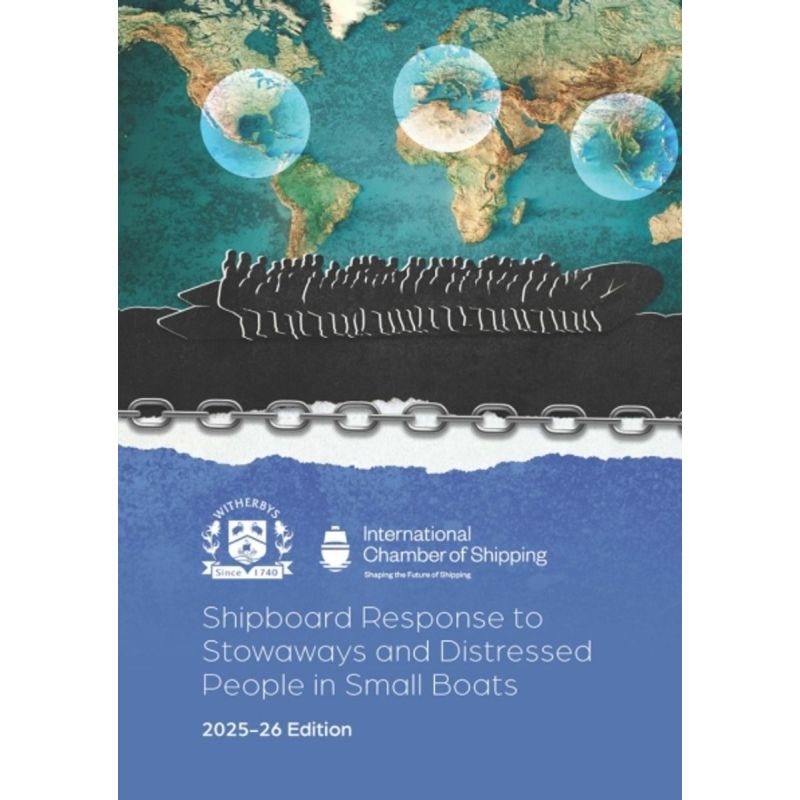



Essential maritime guide for crews handling stowaways, distressed migrants, and rescue operations in small boats. Ensures compliance, safety, and life-saving protocols at sea.
Data sheet
Specific References
Navigating the complexities of stowaways, distressed migrants, and human trafficking victims at sea demands precision, preparedness, and adherence to international protocols. This comprehensive guide delivers actionable strategies for merchant marine crews, ensuring compliance with legal obligations while prioritizing human life and vessel safety. Designed for ship officers, captains, and maritime security personnel, it bridges the gap between regulatory requirements and real-world operational challenges.
Stowaways pose significant risks to vessel security, crew safety, and operational efficiency. This publication outlines preventive measures, including thorough pre-departure inspections, secure access control, and crew training to detect and deter unauthorized boarding. It provides step-by-step procedures for identifying stowaways, conducting searches, and documenting incidents to meet flag state and port state requirements. By implementing these protocols, shipping companies can minimize disruptions, avoid costly delays, and ensure compliance with SOLAS and ISPS regulations.
Encountering distressed migrants or refugees in small, overcrowded vessels requires immediate and coordinated action. This guide details rescue protocols, emphasizing the captain’s authority and responsibility under international maritime law. It covers risk assessment, safe boarding procedures, medical triage, and communication with coastal states and rescue coordination centers. Crews will learn how to balance humanitarian obligations with vessel security, ensuring swift and effective responses while mitigating risks such as piracy or smuggling threats.
Human trafficking at sea is a growing concern, demanding heightened vigilance from maritime professionals. This publication clarifies the legal framework governing trafficking victims, including obligations under the Palermo Protocol and IMO guidelines. It provides guidance on identifying signs of trafficking, securing evidence, and coordinating with law enforcement agencies. Crews will gain insights into protecting victims’ rights while fulfilling reporting requirements, ensuring ethical and lawful outcomes in high-stakes scenarios.
Effective response to stowaways and distressed persons begins with crew training. This guide emphasizes the importance of drills, scenario-based exercises, and clear communication protocols. It includes checklists for emergency response, roles and responsibilities for crew members, and strategies for managing stress and fatigue during prolonged operations. By fostering a culture of preparedness, shipping companies can enhance crew confidence and operational resilience in critical situations.
Staying compliant with evolving maritime regulations is non-negotiable for vessel operators. This publication aligns with key conventions, including SOLAS, SAR, and FAL, providing up-to-date interpretations of legal obligations. It addresses flag state variations, port state control inspections, and the role of classification societies in verifying compliance. Crews and ship managers will find practical tools to navigate regulatory complexities, reducing the risk of penalties or detention.
Drawing from real-world incidents, this guide analyzes case studies to highlight best practices and common pitfalls. Lessons learned from past stowaway and rescue operations offer valuable insights into improving response strategies. Crews will benefit from actionable takeaways, such as effective communication techniques, resource allocation, and post-incident debriefing methods to refine future responses.
This 2025-2026 edition is tailored for on-board use, featuring durable construction, clear formatting, and quick-reference sections. Its compact dimensions (305 mm x 220 mm) and lightweight design (1.5 kg) make it ideal for storage in shipboard libraries or bridge workstations. The publication’s structured layout ensures easy access to critical information, supporting crews in making informed decisions under pressure.
Master Critical Maritime Challenges with Expert Guidance on Stowaways and Rescue Operations
When lives are at stake and legal obligations demand immediate action, *Shipboard Response to Stowaways and Distressed People in Small Boats* equips maritime professionals with the knowledge to act decisively. This 2025-2026 edition delivers a robust framework for managing stowaways, distressed migrants, and human trafficking victims at sea, ensuring compliance with international maritime law while prioritizing safety and humanitarian responsibilities.
Comprehensive Protocols for High-Stakes Scenarios
From pre-departure security measures to rescue operations in open waters, this guide covers every phase of response. It provides detailed procedures for detecting and deterring stowaways, including access control strategies, search techniques, and documentation requirements. For distressed persons in small boats, it outlines rescue protocols, medical triage, and coordination with rescue coordination centers, ensuring crews can act swiftly without compromising vessel security.
Legal Clarity and Ethical Decision-Making
Navigating the legal landscape of stowaways and distressed migrants requires precision. This publication clarifies obligations under SOLAS, SAR, and the Palermo Protocol, offering practical guidance on reporting, evidence preservation, and victim protection. Crews will learn how to balance humanitarian duties with operational security, reducing risks such as piracy or smuggling while fulfilling flag state and port state requirements.
Built for On-Board Use and Crew Training
Designed for practical application, this 198-page guide features a durable, compact format (305 mm x 220 mm) and weighs just 1.5 kg, making it ideal for shipboard libraries or bridge workstations. Its structured layout includes checklists, case studies, and quick-reference sections, ensuring crews can access critical information under pressure. The 2025-2026 edition reflects the latest regulatory updates, providing up-to-date tools for compliance and operational excellence.
This essential maritime guide spans 198 pages, offering a comprehensive yet accessible resource for crews and officers. Measuring 305 mm in height and 220 mm in width, its compact design ensures easy storage in shipboard libraries or workstations. Weighing 1.5 kg, it balances durability with portability, making it ideal for on-board use. The 2025-2026 edition is published in English, aligning with international maritime standards and regulatory requirements.
With decades of expertise in maritime safety and compliance, this publisher delivers authoritative guidance tailored to the unique challenges of the shipping industry. Their publications are trusted by crews, ship managers, and regulatory bodies worldwide, offering practical solutions that bridge the gap between legal obligations and real-world operations. Each edition is meticulously updated to reflect the latest international conventions, ensuring maritime professionals stay ahead of evolving risks and requirements.
The guide covers procedures for handling stowaways, migrants (including refugees), victims of human trafficking, and individuals in distress encountered at sea in small boats.
The guide details the captain’s responsibilities, including safety protocols, legal obligations, preventive measures, and recommended responses for stowaway and rescue scenarios.
It provides structured procedures for preparation, risk assessment, and coordinated responses to ensure the safety of both the vessel and individuals involved in rescue or stowaway situations.
While it offers general maritime guidance, the procedures are designed to be adaptable for various commercial vessels encountering stowaways or distressed individuals at sea.
The guide includes best practices for securing access points, conducting thorough searches, and implementing surveillance to minimize the risk of stowaways boarding the vessel.
The guide is updated biennially, with the current edition covering 2025-2026 to reflect the latest maritime regulations and best practices.
The guide measures 305 mm in height, 220 mm in width, and weighs 1.5 kg, making it suitable for onboard reference.