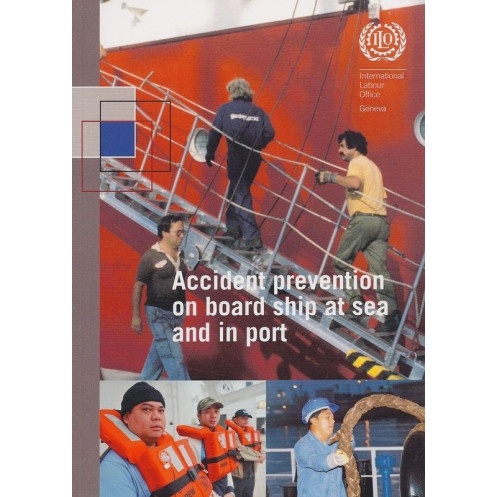

International labour office - Accident prevention on Board Ship at Sea and in port
search
  • googlemap
  • International labour office - Accident prevention on Board Ship at Sea and in port

International labour office - Accident prevention on Board Ship at Sea and in port

€45.60
Tax included
In English language
Estimated preparation time: 5 to 14 days

Expert guidelines for preventing accidents on ships at sea and in port, addressing risks in bulk transport, ro-ro vessels, and container operations. Ideal for maritime safety and compliance.

SAS0095

Data sheet

Picto
In English language

Specific References

UPC
400000137315
EAN13
4000000135616
New
Description détaillée

Accident Prevention on Board Ship at Sea and in Port

Publication in English
Paperback edition

Essential Safety Guidelines for Maritime Professionals

This comprehensive guide is a cornerstone resource for maritime safety, offering critical insights into accident prevention across all phases of ship operations. Designed to address the unique challenges of modern shipping, it provides actionable strategies to mitigate risks in high-stakes environments—whether navigating open waters or docked in port. From bulk cargo transport to roll-on/roll-off vessels, this publication delivers expert-backed solutions tailored to the evolving demands of the maritime industry.

Risk Assessment for Hazardous Cargo and Operations

The maritime industry faces constant exposure to risks—oil spills, chemical leaks, and mechanical failures can have catastrophic consequences. This guide equips professionals with structured methodologies to evaluate and manage these dangers, focusing on high-risk cargo like petroleum, gas, and chemicals. It also tackles operational hazards specific to container ships, ferries, and ro-ro vessels, ensuring crews can anticipate and neutralize threats before they escalate. By integrating real-world scenarios, the publication bridges the gap between theory and practice, making it an indispensable tool for risk-aware decision-making.

Best Practices for Core Maritime Tasks

Safety in maritime operations hinges on precision—whether anchoring in turbulent waters, securing moorings under pressure, or executing complex loading procedures. This guide dissects these critical tasks, offering step-by-step protocols to minimize human error and equipment failure. It covers everything from safe access to vessels and proper use of lifting gear to routine maintenance and cargo handling, all while accounting for the dynamic nature of global trade. With clear, standardized procedures, it empowers crews to maintain operational integrity in even the most demanding conditions.

Global Collaboration for Industry-Wide Impact

Developed through international collaboration, this publication reflects the collective expertise of maritime authorities, shipowners, and seafarers. It serves as a unified framework to harmonize safety standards across fleets, ports, and regulatory bodies, fostering a culture of prevention that transcends borders. By aligning with the latest industry advancements, it ensures that safety protocols remain relevant amid technological and logistical shifts. Whether for government agencies, shipping companies, or onboard personnel, this guide is a catalyst for reducing accidents and safeguarding lives at sea.

Optimized for Practical Application

Beyond theoretical guidance, this publication is engineered for real-world utility. Its structured approach allows professionals to quickly reference solutions for specific challenges, from emergency response to daily operations. The second edition, updated in 1996, incorporates lessons learned from decades of maritime experience, making it a trusted companion for those committed to elevating safety standards. With a focus on clarity and accessibility, it transforms complex safety principles into actionable steps, ensuring every stakeholder—from deckhands to fleet managers—can contribute to a safer maritime future.

Elevate maritime safety with the definitive guide to accident prevention on ships
This essential publication is the maritime industry’s go-to resource for mitigating risks in high-pressure environments, from open seas to bustling ports. Designed for professionals who demand precision, it delivers a systematic approach to identifying and neutralizing hazards—whether handling volatile bulk cargo like oil and chemicals or managing the complexities of container ships, ferries, and ro-ro vessels. With a focus on real-world applicability, this guide transforms safety theory into actionable protocols, ensuring crews can operate with confidence in even the most challenging conditions.

Engineered for the modern maritime landscape
The shipping industry’s rapid evolution demands safety standards that keep pace with technological and logistical advancements. This publication addresses that need by providing tailored solutions for critical tasks—anchoring, mooring, cargo loading, and maintenance—while accounting for the unique risks of today’s global trade routes. Its guidelines are grounded in decades of industry expertise, offering a blend of technical rigor and practical wisdom that professionals can rely on to prevent accidents before they occur.

A collaborative blueprint for global maritime safety
Developed through international cooperation, this guide unites the insights of maritime authorities, shipowners, and seafarers into a cohesive framework. It serves as a universal reference for harmonizing safety practices across fleets and ports, ensuring consistency in accident prevention worldwide. By aligning with the latest industry developments, it empowers governments, companies, and crews to foster a culture of safety that transcends borders, reducing risks and protecting lives at every stage of maritime operations.

This authoritative guide is presented in a practical paperback format, weighing just 1 kg for easy portability and reference. Written entirely in English, it is the second edition, published in 1996, and remains a vital resource for maritime professionals. The publication is brand new, ensuring all content is up-to-date and ready for immediate application in the field.

The organization behind this publication is a globally recognized authority in labor standards and workplace safety, with a long-standing commitment to improving conditions across industries. With decades of expertise in maritime safety, it brings together international experts to develop guidelines that set the benchmark for accident prevention. Its work is trusted by governments, employers, and workers worldwide to create safer, more resilient work environments.

  • This guide stands out as an indispensable tool for maritime professionals, offering unparalleled depth and practicality in accident prevention.
  • Its comprehensive coverage of high-risk scenarios—from hazardous cargo handling to routine operations—ensures crews are equipped to tackle challenges with confidence.
  • Backed by international collaboration, it provides standardized protocols that align with global safety standards, making it a trusted resource for fleets, ports, and regulatory bodies alike.
  • Lightweight and accessible, it’s designed for real-world use, allowing professionals to reference critical safety measures anytime, anywhere.
What types of ships are covered in the safety guidelines?

The guidelines address safety measures for bulk carriers transporting oil, gas, and chemicals, as well as roll-on/roll-off ships, ferries, and container vessels.

Does this book include procedures for mooring and anchoring?

Yes, it provides detailed directives on mooring, anchoring, and other critical operations to enhance safety during these tasks.

Are there specific sections on cargo handling and maintenance?

Yes, it covers general cargo loading operations, the use of lifting equipment, and maintenance procedures to prevent accidents.

Who is the target audience for this publication?

It is designed for shipowners, seafarers, and government authorities involved in maritime safety and accident prevention.

Is this book suitable for training purposes?

Yes, it serves as a practical reference for training programs focused on maritime safety and risk assessment.

What edition and publication year is this book?

This is the 2nd edition, published in 1996.
Loading...