




Streamline maritime operations with this revised digital compendium, including UN/EDIFACT codes for FAL forms and security reporting. Secure, downloadable, and optimized for the free IMO reader.
Data sheet
Specific References
Transform Maritime Operations with the Revised IMO Compendium for Facilitation and Electronic Business
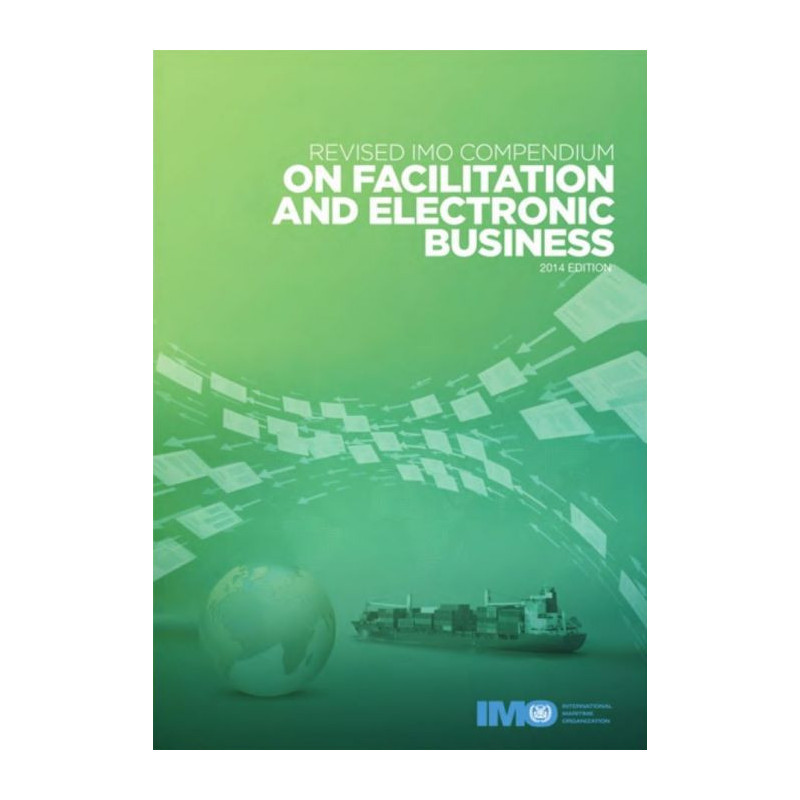
The *Revised IMO Compendium for Facilitation and Electronic Business* is the authoritative digital resource for modernizing maritime data exchange. This updated edition, adopted by the IMO’s Facilitation Committee, replaces outdated frameworks with cutting-edge UN/EDIFACT codes, ensuring compliance with the FAL Convention and pre-arrival security reporting requirements. It eliminates inefficiencies in paperwork, reduces processing delays, and enables seamless electronic communication between ships, ports, and regulatory agencies—making it indispensable for a digitized maritime industry.
Standardized Data for Global Compliance
This compendium provides a unified model for structuring maritime information, covering everything from FAL forms to security declarations. By harmonizing data formats, it ensures consistency across international borders, reducing errors and accelerating clearance procedures. Shipping companies, port authorities, and customs officials rely on this resource to align with IMO standards, streamline workflows, and support the transition to paperless trade. The inclusion of UN/EDIFACT codes further enhances interoperability, allowing systems to communicate effortlessly and securely.
Optimized for Digital Workflows
Delivered as a secure digital download, this publication is designed for the free IMO e-reader, offering instant access to critical guidelines. The digital format supports quick navigation, keyword searches, and offline use—ideal for professionals on the move. Whether managing crew lists, cargo manifests, or port entry documentation, users benefit from a portable, up-to-date reference that adapts to evolving regulatory demands. This compendium is not just a tool; it’s a strategic asset for organizations aiming to enhance efficiency and reduce operational costs.
Future-Proofing Maritime Operations
As the maritime industry embraces digital transformation, this compendium serves as the foundation for electronic business (e-business) adoption. It empowers stakeholders to implement EDI solutions, automate reporting, and integrate with global trade systems. By leveraging this resource, organizations can stay ahead of regulatory changes, improve data accuracy, and foster collaboration across the supply chain. For maritime professionals committed to innovation, this compendium is the key to unlocking smarter, faster, and more secure operations.
The *Revised IMO Compendium for Facilitation and Electronic Business* is a digital publication in English, featuring a locked format for use with the free IMO e-reader. This revised edition, adopted during the 38th session of the IMO’s Facilitation Committee, includes updated UN/EDIFACT codes for FAL forms and pre-arrival security reporting, replacing the 2001 version. Published by the International Maritime Organization (IMO), it serves as the standard reference for harmonizing maritime data exchange and electronic business processes.
For over seven decades, the International Maritime Organization (IMO) has been the global authority on maritime safety, security, and environmental standards. As a specialized agency of the United Nations, the IMO develops and maintains international regulations that govern shipping, ensuring uniformity and efficiency across the industry. Its publications, including this compendium, are trusted resources for governments, shipping companies, and maritime professionals worldwide, driving innovation and compliance in the sector.
The digital version is a locked format designed to be read using the free IMO reader.
Yes, it contains the UN/EDIFACT codes for FAL forms established in the FAL Convention, as well as for pre-arrival security-related information reports.
Yes, this revised edition replaces the 2001 version and was adopted during the thirty-eighth session of the FAL Committee.
Yes, once downloaded, the publication can be accessed offline using the free IMO reader.
It serves as a reference model to harmonize semantics and information formats in the maritime sector, particularly for facilitation and electronic business.
No, it requires the free IMO reader to access the locked digital format.
You might also like