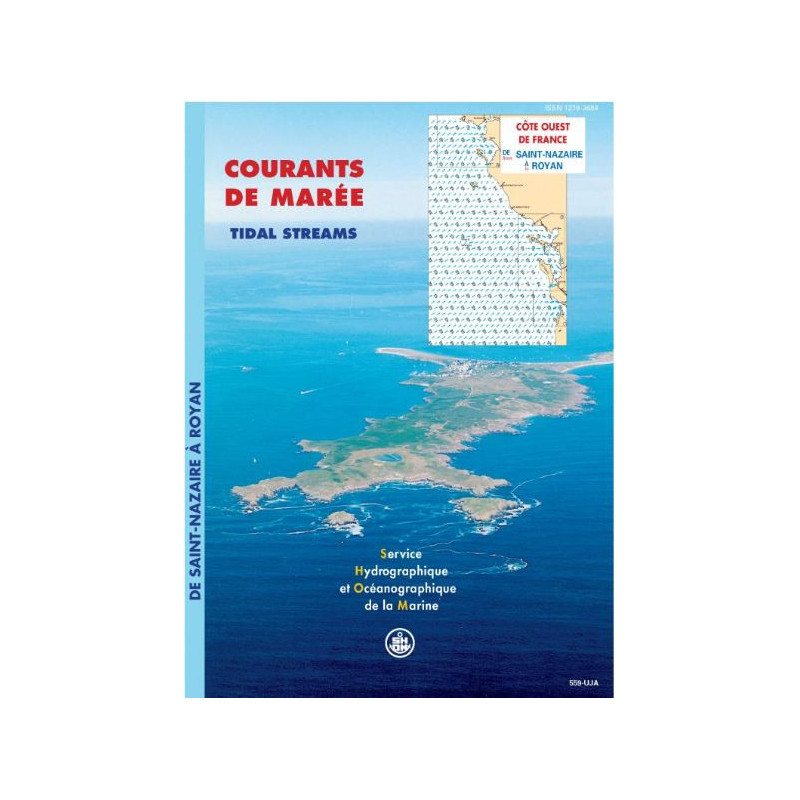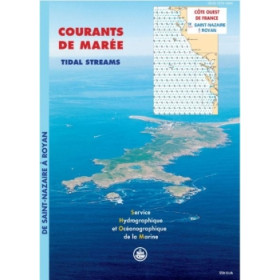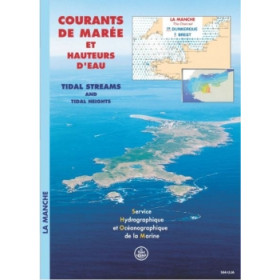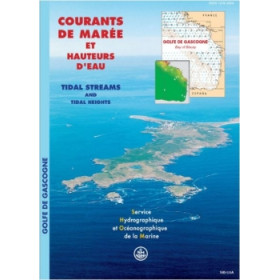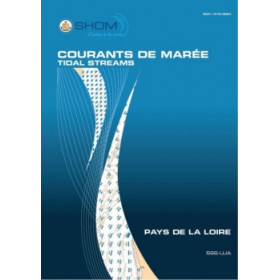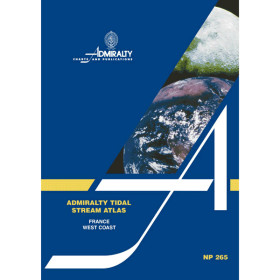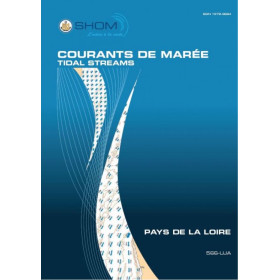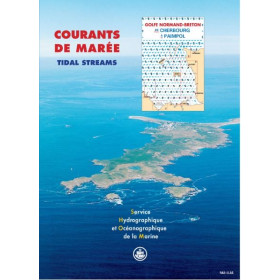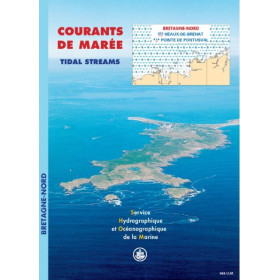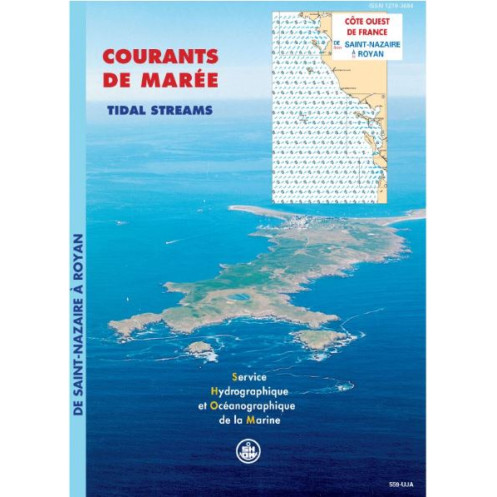



This tide current atlas for western France’s Atlantic coast (Saint-Nazaire to Royan) provides hourly maps for spring and neap tides. Ideal for safe navigation, fishing, and diving.
Data sheet
Specific References
Navigate the dynamic tidal currents of France’s western coastline with unmatched accuracy. This tidal current atlas delivers hour-by-hour visualizations of tidal flows, covering the critical stretch from the Loire estuary to the Gironde estuary. Designed for professionals who demand reliability, it maps currents in both mean spring and neap tides, ensuring safe and efficient passage through one of Europe’s most challenging maritime regions.
Tidal currents along France’s Atlantic coast can shift rapidly, creating hazards for vessels and infrastructure. This atlas eliminates guesswork by providing:
Whether navigating the narrow channels of the Pertuis Charentais or managing large vessels in the Gironde estuary, this atlas is the standard reference for professionals who cannot afford uncertainty. Its proven accuracy and practical design make it indispensable for:
Master the Tides of France’s Atlantic Coast with Unrivaled Precision
This tidal current atlas is the definitive resource for navigating the complex waters from Saint-Nazaire to Royan, where shifting tides dictate safe passage and operational success. Published in 2001 and trusted by maritime professionals for over two decades, it provides hour-by-hour visualizations of tidal currents in both mean spring and neap tides, ensuring accurate planning for vessels of all sizes. Weighing just 1 kg, this paperback edition is built for durability in demanding environments, from the bridge to the field.
Engineered for High-Stakes Maritime Operations
Covering five critical regions at tailored scales—from broad overviews (1:900,000) to localized charts (1:66,000)—this atlas delivers the precision needed for commercial shipping, port operations, and offshore projects. Key zones like the Pertuis Charentais and Gironde estuary are mapped in detail, where tidal shifts impact everything from vessel traffic to environmental monitoring. Color-coded maps and standardized symbology ensure instant interpretation, while a bilingual legend (French with English summaries) supports international crews.
Proven Reliability for Professionals Who Demand Accuracy
Designed for professionals who cannot afford uncertainty, this atlas is the go-to reference for mitigating risks in one of Europe’s most dynamic tidal regions. It provides data-backed insights for route planning, dredging projects, and emergency response, helping teams avoid groundings, optimize fuel consumption, and comply with maritime regulations. Whether navigating narrow channels or managing large vessels, this resource ensures operational efficiency and safety in every tide.
This tidal current atlas provides comprehensive coverage of France’s western coastline, from Saint-Nazaire to Royan, with detailed maps at five scales: 1:900,000 (West Coast overview), 1:430,000 (Croisic to Noirmoutier), 1:300,000 (Pertuis Charentais), 1:66,000 (La Rochelle approach), and 1:310,000 (Gironde estuary). Published in 2001, the paperback edition weighs 1 kg and features color-coded charts for mean spring and neap tides, with bilingual explanations in French and English.
With over three centuries of expertise in hydrography and oceanography, this organization is the official authority for maritime cartography and tidal data in France. Renowned for its precision and reliability, it provides essential resources for commercial shipping, port authorities, and environmental agencies worldwide, ensuring safety and efficiency in some of the world’s most challenging maritime environments.
The charts visualize tidal currents for both mean spring tides and mean neap tides, covering conditions at each hour of the tide cycle.
Yes, they are designed for navigation, diving, fishing, and environmental studies such as sea discharges and port developments.
The scales vary by region: 1:900,000 for the West Coast of France, 1:430,000 for the Croisic to Noirmoutier Island, 1:300,000 for the Pertuis Charentais, 1:66,000 for the La Rochelle approach, and 1:310,000 for the Gironde estuary.
Yes, the atlas includes explanations in French with a summary in English.
The atlas is published in A4 paper format, with color maps and a weight of approximately 1 kg.
The charts cover five detailed regions: the West Coast of France, the area from Croisic to Noirmoutier Island, the Pertuis Charentais, the approach to La Rochelle, and the Gironde estuary.
The atlas was published in 2001, with data and charts reflecting tidal current information available up to that year.
You might also like